
The legacy of Elver Daza
In 1964, peasant farmers in Colombia’s countryside took up arms, calling themselves the Revolutionary Armed Forces of Colombia – FARC. Influenced by communist and Marxist ideologies, they spoke of justice for the poor, of land reform, of dignity for rural communities abandoned by a distant government in Bogotá. The grievances were real – wealthy landowners controlled vast estates while peasants scraped by with nothing. For a time, some fighters genuinely believed they were creating a better Colombia. But revolutions have a way of devouring their own ideals.
By 1980, everything had changed. FARC discovered cocaine. As American and European demand exploded, the rebels found themselves sitting on a gold mine. Throughout rural Colombia, coca plants grew abundantly. At first, FARC claimed they were just “taxing” drug traffickers, but taxation became partnership, and partnership became direct control. By the mid-1980s, FARC was running the cocaine trade, controlling plantations, operating labs, and defending trafficking routes with violence.
To protect their drug empire, FARC needed more fighters. Armed rebels arrived at poor farms and villages throughout the countryside. Sometimes they used persuasion – promises of adventure and three meals a day. Often they simply took what they wanted. Boys and girls as young as twelve were forcibly recruited into military training and combat. Those who resisted faced threats. Those who tried to escape faced execution.
The rebels’ appetite for money grew. FARC sent representatives to farms and businesses with simple messages: pay a monthly “tax” or face consequences. Those who refused received warnings – a burned truck, a kidnapped employee, a warehouse bomb.
Kidnapping became an industry. FARC set up roadblocks on rural highways, checking identification and selecting victims. Captives were marched into the mountains and held in jungle camps for months or even years while families negotiated ransoms. A 2001 New York Times article titled “The Kidnapping Economy” reported 3,706 kidnappings in 2000 – well below the actual number, as people preferred to handle their cases quietly. Colombia was the undisputed world leader in kidnappings.
Through the 1980s and 1990s, Colombia descended into chaos. Paramilitaries formed, drug cartels waged their own wars, and the military fought everyone. Caught in the middle were ordinary Colombians like Hernan Melo.
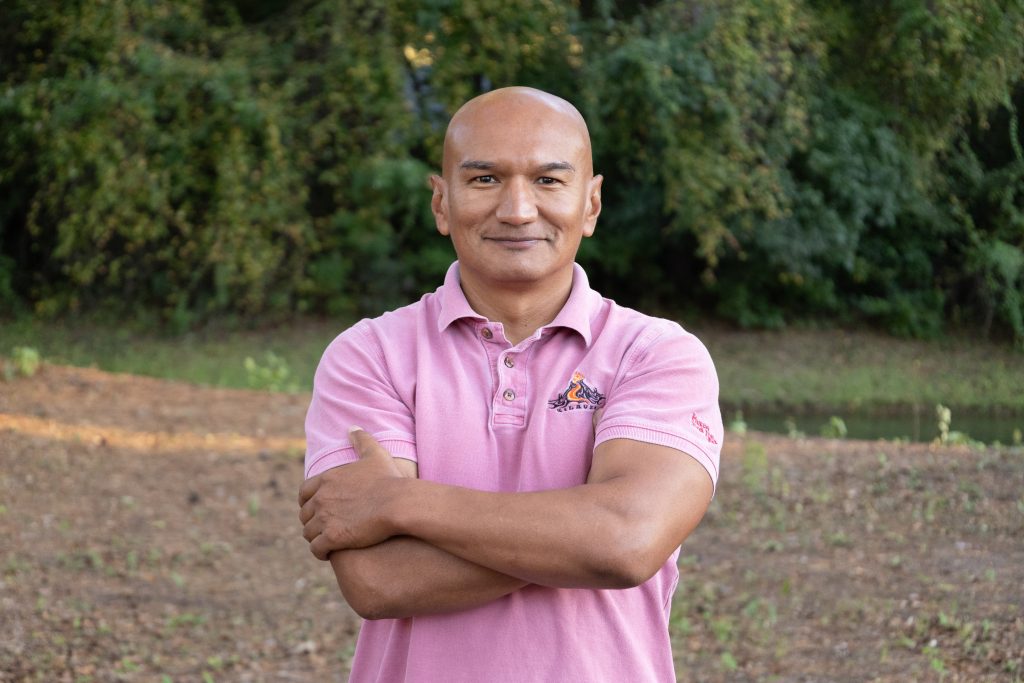
When we reached out to Melo, we expected a simple story about a small business owner trying to get his business off the ground. Melo, who moved to the Charleston area earlier this year for a job at a major aviation company, is the owner of MeloFarmX, a U.S.-registered business shipping Colombian coffee nationwide. We talked about coffee freshness – how beans on retail shelves are often roasted months, sometimes over a year, before customers buy them. We discussed his farm and how the coffee beans grow among fruit trees. Melo also mentioned that a portion of every sale goes to support Colombian children. When we asked why, he simply said that he wants to help kids while adding that he established a non-profit – MeloKidsFund.
Our conversation took us back to 2004, when Melo first arrived in the U.S. He was sent by the Colombian military to the U.S. Army Aviation Logistics School at Fort Eustis, Virginia to learn how to maintain UH-60 Black Hawk helicopters. Melo had joined the Colombian military in 1998. After completing basic training, he was selected as part of a small group for the military’s aviation school, where he trained to maintain helicopters. He served as both a ground mechanic and a flying crew chief, and in 2002, he survived a Black Hawk helicopter crash during a mission in southern Colombia.
Sign up for the Manytown newsletter
The plan was to return to the Colombian military after completing his studies in the U.S., but his time here made him realize that he wanted a new life in a new country.
Melo’s aviation career took him to different parts of the country and beyond – he worked in Slovakia, the Marshall Islands, and the United Arab Emirates. He worked on helicopters both on the ground and in the air as a flying crew chief, and today, he’s part of a team working on jet airliners. When asked how an aviation expert got into coffee, Melo said that coffee runs in his family.
Melo was born in 1980 in Samaniego, a town where most of the population makes its living from coffee and sugarcane. Both his father and grandfather were coffee farmers. Melo never really got to know his father – a tragic incident took his life in his early 20s. The years ahead were challenging emotionally and financially. Overwhelmed by grief and the burden of raising three children alone, Melo’s mother was absent for a period of time, sending Melo and his siblings to his grandparents.
When Melo was nine years old, he went back to live with his mother, who brought a stepfather into his life. The financial situation was still difficult, and instead of going to third grade, Melo began working in sugarcane fields. Beyond the grueling work itself, Melo faced constant beatings from other kids on the farm, and at the age of twelve, he ventured into the nearby city to find work among what he hoped would be more civilized people.
Melo found a small welding shop in the city and asked the owner for a job. “I told him I’ll do anything and that I’m a fast learner,” Melo recalls. The man asked his age, then told him he couldn’t hire him because he was a minor, adding that he should be in school, not working. He asked for Melo’s address, wrote something on a piece of paper, and handed it to him. The note included the name of a school twenty minutes from Melo’s home and the school director’s name. “Go with your mom and tell him I sent you,” the man said.
Melo showed the note to his mother, but her response wasn’t what he’d hoped for. “Don’t believe this man,” she said. “Go find a job.” Two days later, the man showed up at Melo’s house carrying bags of school supplies. He was upset. “Why aren’t you in school?” he asked Melo. Then he had a heated conversation with Melo’s mother. The man took Melo and enrolled him in school. At twelve years old, Melo took placement tests and was put in fourth grade. The man paid for the first three years. After that, Melo earned a scholarship for his good grades.
School changed the trajectory of Melo’s life. “Being able to go to school in Colombia is a big deal,” he explained. “Watching my mom struggle without an education, and going through what I went through, it made me want to help kids.” But school proved to be more than just a place for education. When Melo was fifteen, FARC guerrillas used his school as a meeting place, forcing local farmers inside and locking the doors to warn them not to cooperate with the military. As the rebels left, they grabbed Melo and two other students as new recruits. His student ID and a persuasive aunt saved him. She convinced the guerrillas that Melo would be more valuable to them after he finished his education. They let him go.
Melo’s success in school, and later the military, inspired his younger half-siblings to pursue their own education and join the military. Years later, when Melo was deep into his aviation career, his brother reached out. He’d received money from the military and wanted to buy their parents a house – one with more space. The property he found was on farmland, but he needed help with the cost. Melo covered the difference. The land was overrun with weeds. Today, it has ten thousand coffee trees.
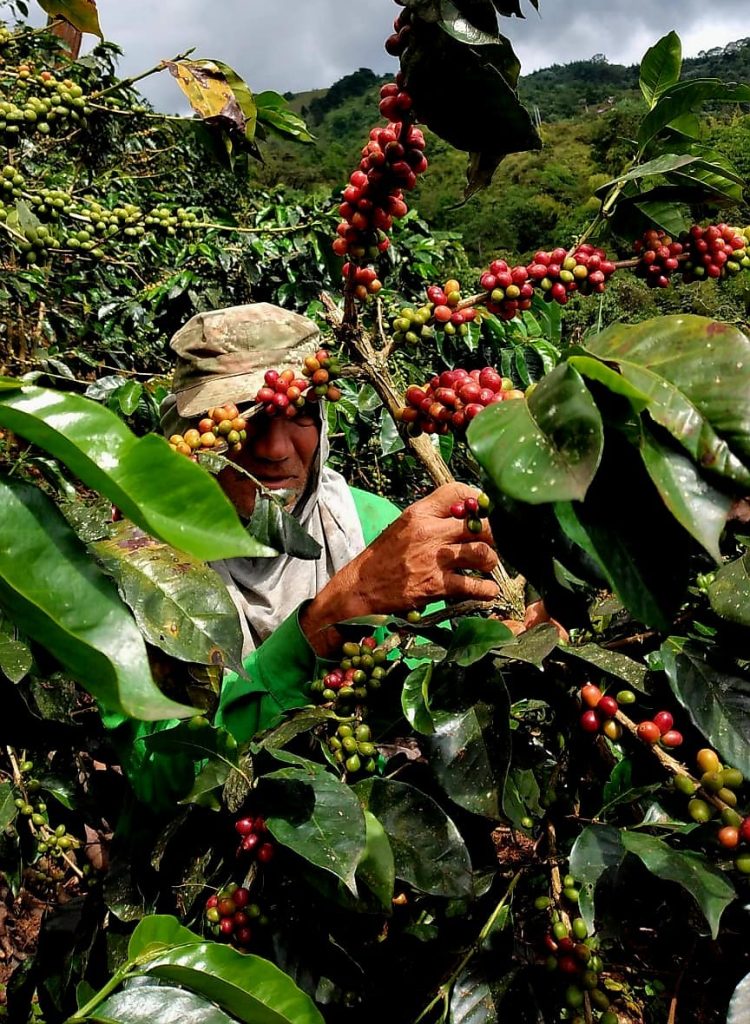
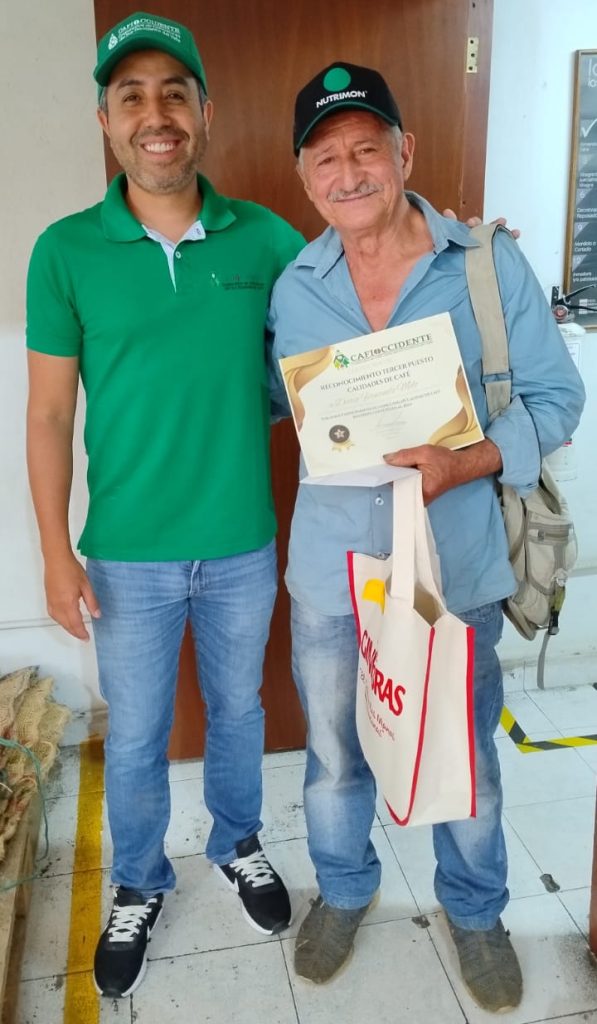
The family’s original plan was to sell the coffee locally in Colombia. But after visiting the farm and tasting the coffee, Melo returned to the U.S. with a suitcase full of beans. “I gave them to different people and they loved it,” he said. Then came another positive signal: the family’s coffee won third place in a regional competition in Colombia.
There’s a popular saying that a good cup of coffee can fix anything. But Melo isn’t fixing a business – he’s building one from scratch, and it will require more than a good cup of coffee. For one, he’s investing more money than originally planned just to keep the farm running. He’s also trying to figure out distribution in a competitive U.S. market. And then there are the challenges that come with operating in Colombia – early last year, rebels burned down the barn after the family refused to pay extortion money. They lost farm equipment, chickens, and over a thousand pounds of coffee.
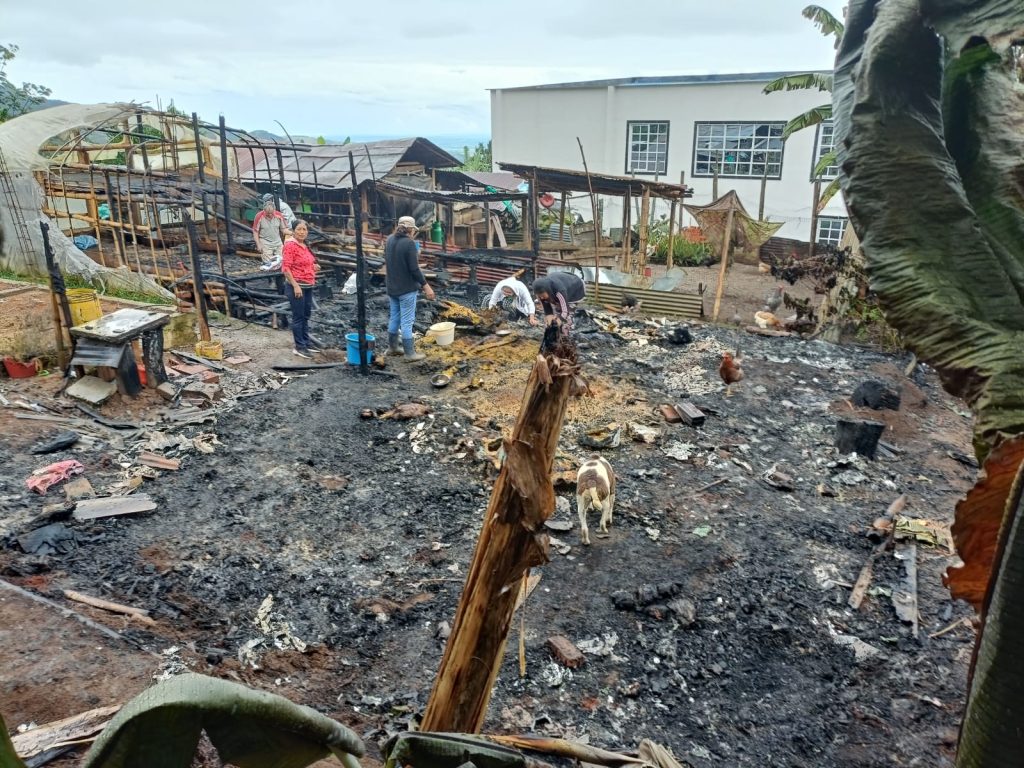
Melo is a big believer – he says that God showed him the way. “Growing up, my main prayer was not to be homeless.” That prayer has been answered, and after years of drifting between places, Melo believes he also found a home. In August, he bought a house in Hollywood, SC, and he hopes his son gets accepted to The Citadel so he can be nearby. But Melo remains deeply connected to Colombia. He and his brother continue supporting local children, and since the coffee venture isn’t yet profitable, they’re funding it from their own pockets. Melo is also still in touch with the man who helped him. In the early years, the man would send Melo gifts on Christmas and Melo, in exchange, would bring him eggs from his family’s farm. When they would meet, the man would often tell Melo that one day he’d make it, and when he did, he should do something for somebody.
That man’s name is Elver Daza.