The secondhand soul: David Santos traded the corporate grind for vintage finds
The word “vintage” has a surprisingly intoxicating history. It traces back to the Latin vindemia – a compound of vinum (wine) and demere (to take off) – which literally meant the taking of the grape harvest. The word passed through Old French as vendange before landing in English in the early 15th century, where for hundreds of years it referred strictly to the yield of wine from a single season. A “vintage year” meant the weather and harvest had been exceptional, and over time the word became shorthand for quality with a specific point of origin. By the late 1800s, people began applying it to other things that had aged well – cars, machinery, objects that were considered classic examples of their era. In the 1960s, “vintage” started its migration into fashion. The word gave secondhand clothing something it had never had: status. It drew a line between a used shirt and a found one – between something discarded and something curated.
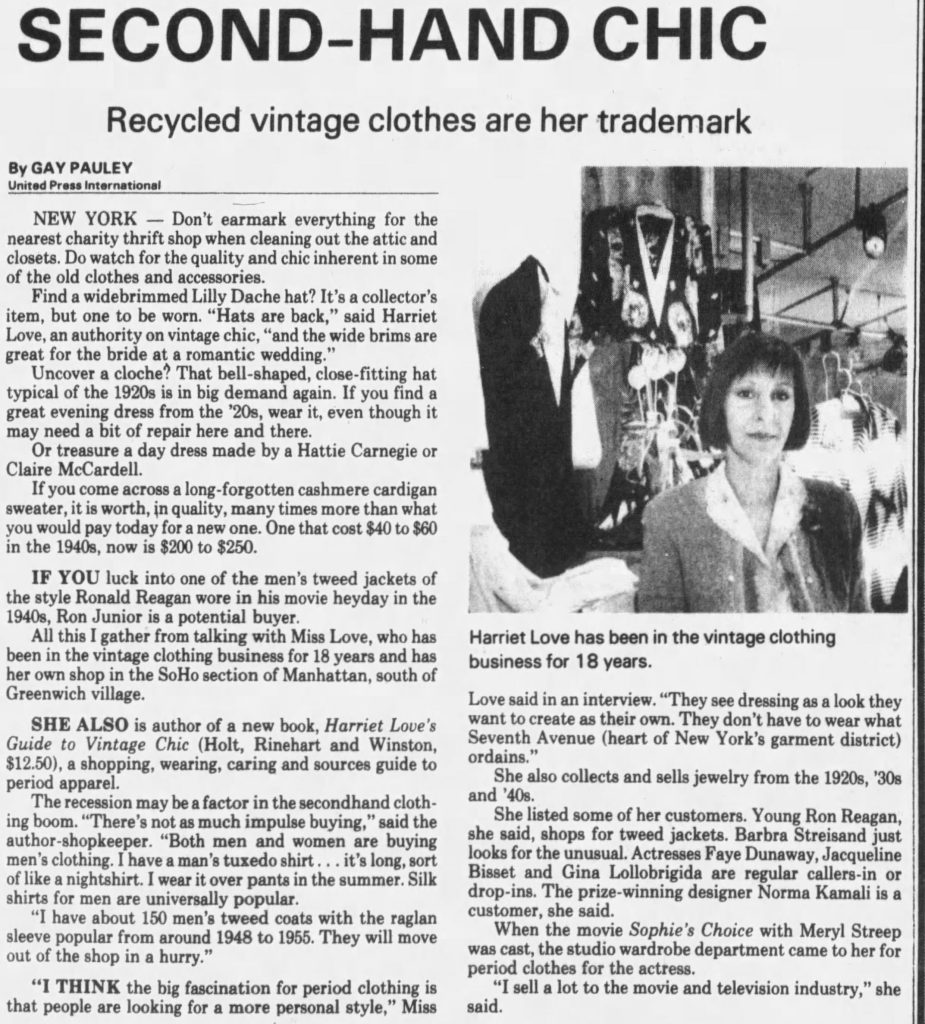
That shift – from secondhand to vintage – didn’t happen on its own. It can be traced, at least in part, to a woman named Harriet Love, who opened a vintage clothing store in NYC in 1965. At the time, old clothes were what you wore on Halloween. Love saw something else in them. By 1982, she had been in the business for 18 years, had written a book called Harriet Love’s Guide to Vintage Chic, and was selling to the wardrobe department of Sophie’s Choice and to customers like Barbra Streisand and Faye Dunaway. She said that the fascination with vintage was about something simple: people wanted a more personal style. They didn’t want to wear whatever the fashion industry told them to. Around the same time, a column called “The Antique Detective” noted that vintage fashion shows were running coast to coast, a new magazine called Vintage Fashions had launched, and collectors in their 20s and 30s were buying up pieces from the 1950s. Vintage clothing dealers, who had once been kept out of the big antique shows, were suddenly in some of the most important ones. The word had done its work. “Used” was something you donated. “Vintage” was something you collected.
Sign up for the Manytown newsletter
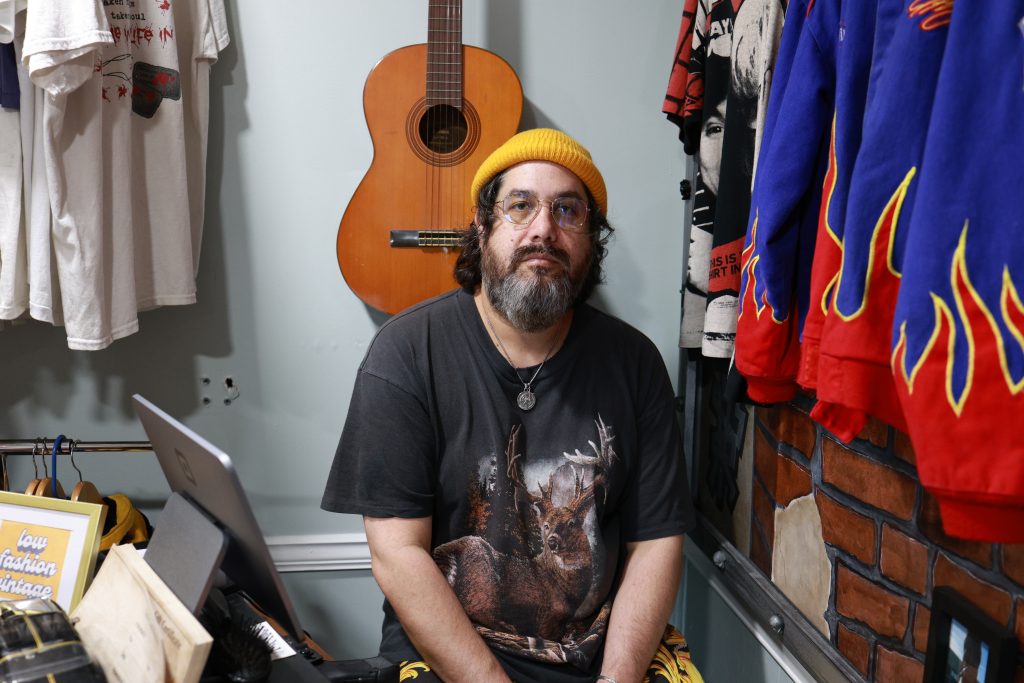
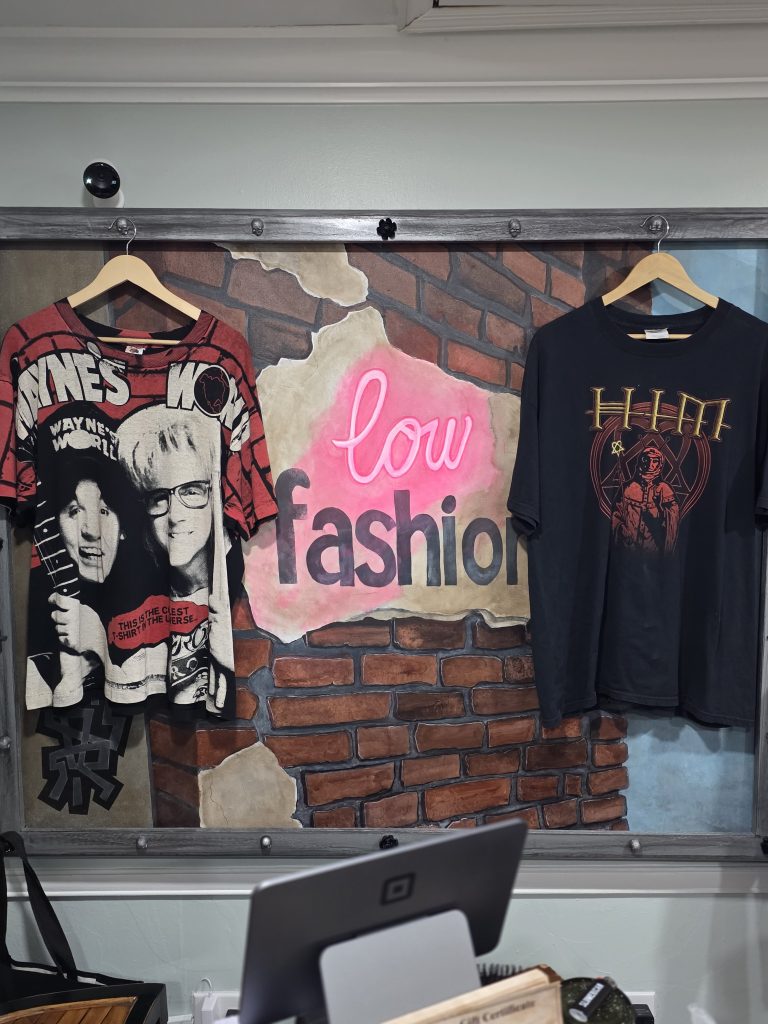
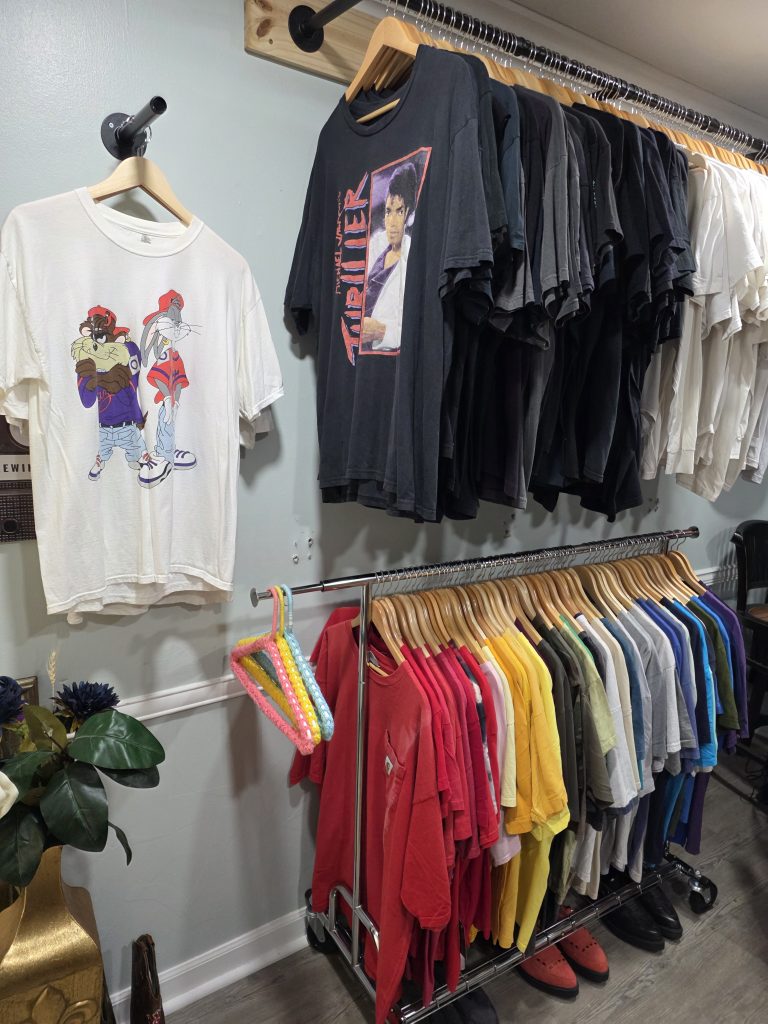
David Santos, 45, was born and raised in North Charleston. He’s been collecting vintage clothing for over a decade – graphic tees, band tees, Tommy Hilfiger, satin jackets, and cardigans. The obsession started with music. Steven Tyler in Aerosmith. Axl Rose in the Guns N’ Roses era. Yelawolf. He’d watch what certain artists wore, where they shopped, how they mixed things that weren’t supposed to go together – Gucci with sneakers, cowboy boots with a rock band tee. High fashion with low fashion. He didn’t want to be the average person when it came to how he dressed. He’d go to vintage markets and local shops, hunting for pieces that you wouldn’t find on a rack at the mall. He got into distressing his own clothing, making newer items look older and worn in. One day he’d wear Vans, the next day cowboy boots. His style was never one thing, and it still isn’t.
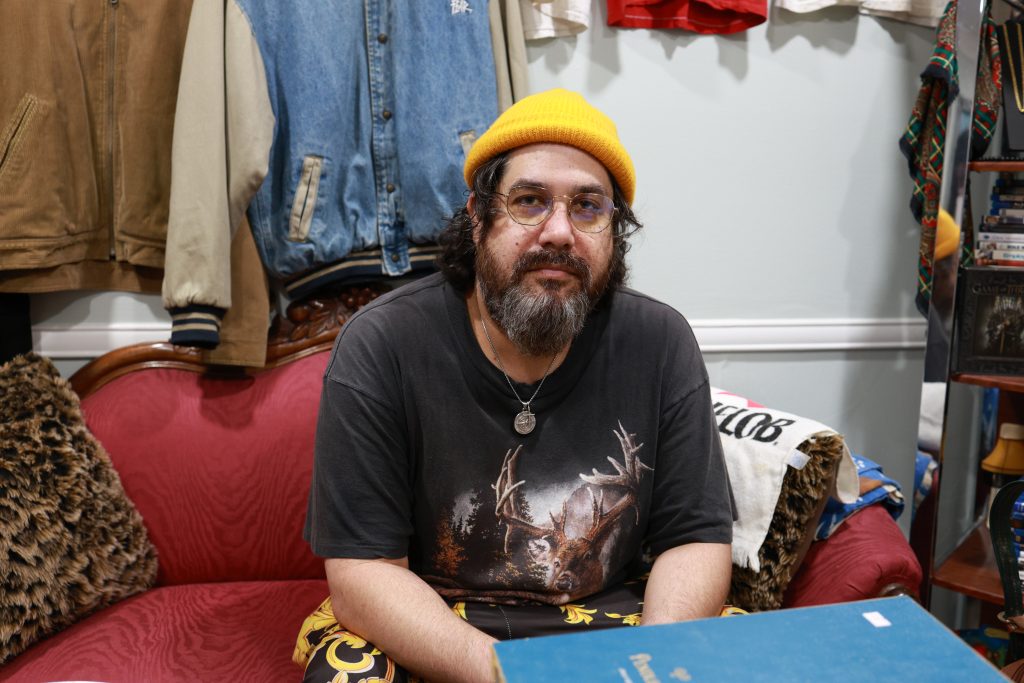
They say the clothes make the man. In David’s case, the versatility he brought to his wardrobe hadn’t translated to his career. He started working retail in his early twenties, moved up to assistant manager, then store manager, running locations for corporate companies for about 15 years. Then he switched paths entirely – left retail for construction, supervising for a rental equipment company for another decade. He had two sons at a young age and a family to support. The work was steady, the paycheck was reliable, and the insurance was there. He never really knew what he wanted to be as a young adult, but he always knew he was into fashion and clothing.
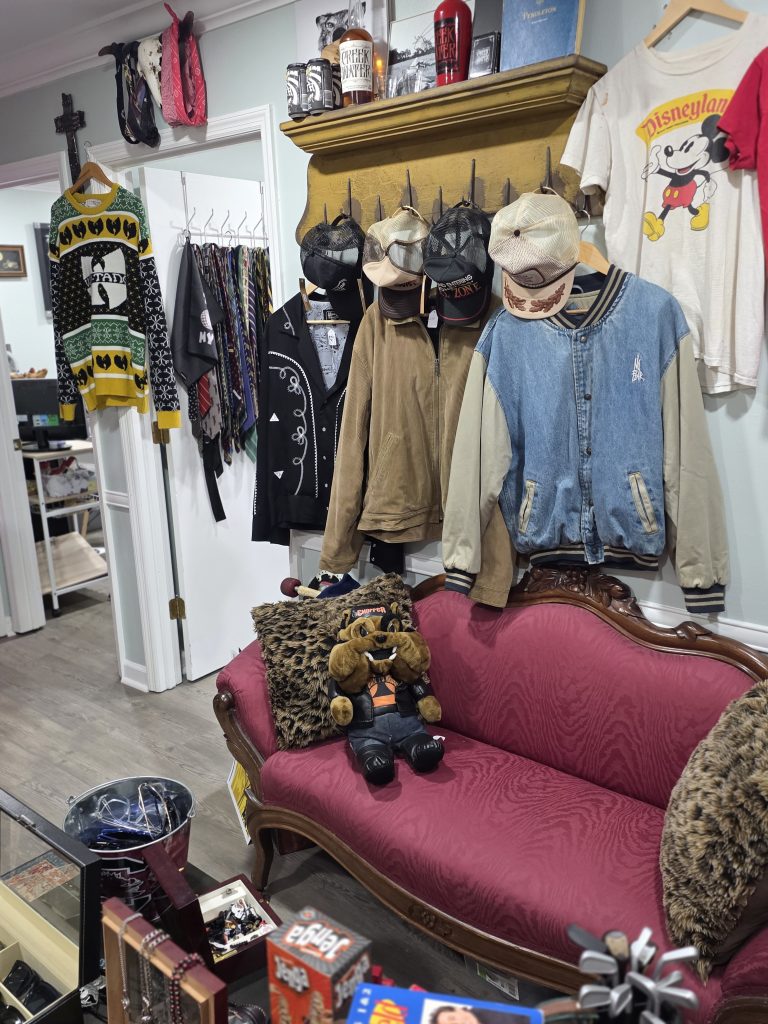
Last year, something shifted. “Working 50 to 70 hours a week and not being compensated enough was a wake-up call,” David says. “If I’m going to work this much, why not do it for myself?” The idea had been building for a while. It started in a room in his house – a mancave with racks of clothing, pictures he liked on the walls, pieces he’d collected over the years. “People would like and comment on how I dressed, positive and negative,” he says. He’d show them the room and they’d have something to say about that too. A conversation last September with his wife, who had started joining him on his vintage shopping runs, led David to launch Low Fashion Vintage, a dedicated space at 8310 Rivers Ave in North Charleston for customers to shop his collection.
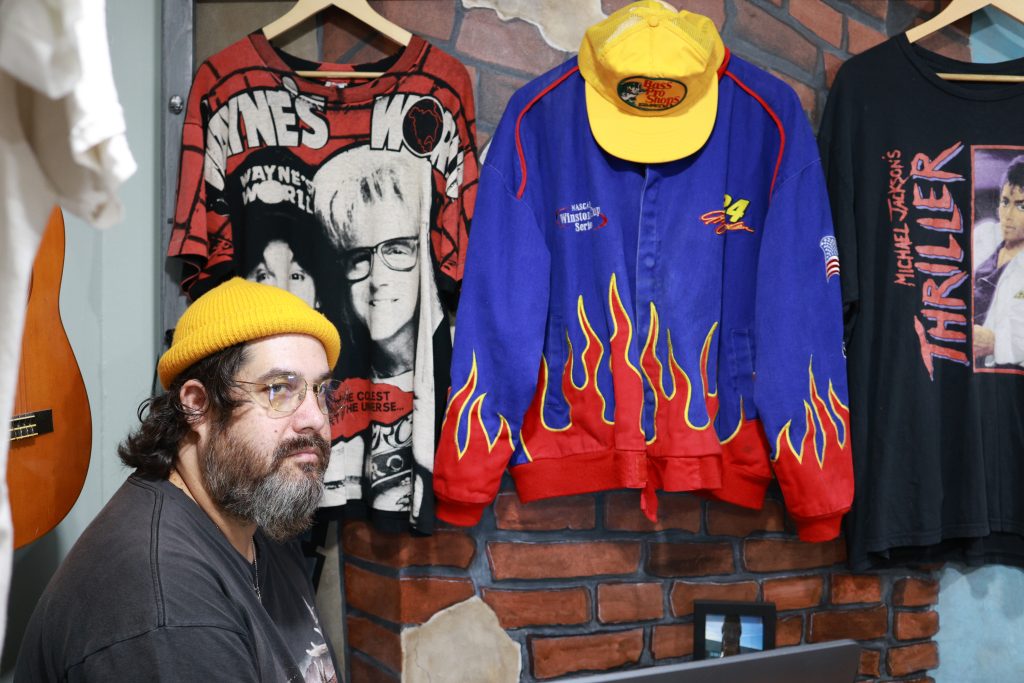
Managing a mancave is one thing. Managing a store which requires permits, licensing, insurance, and more is another. The other learning curve is the product itself. David remembers the 80s and 90s, but when a customer walks in, his job is to explain every piece – what year it’s from, where it came from, who made it. He’s had to learn how to tell a true vintage piece from a replica, what makes a certain piece older, and the difference between a single-stitch and double-stitch. Marketing is another thing. “I grew up in the Myspace era,” David says. “I’m learning to use Instagram for showing the items and getting the word out there.”
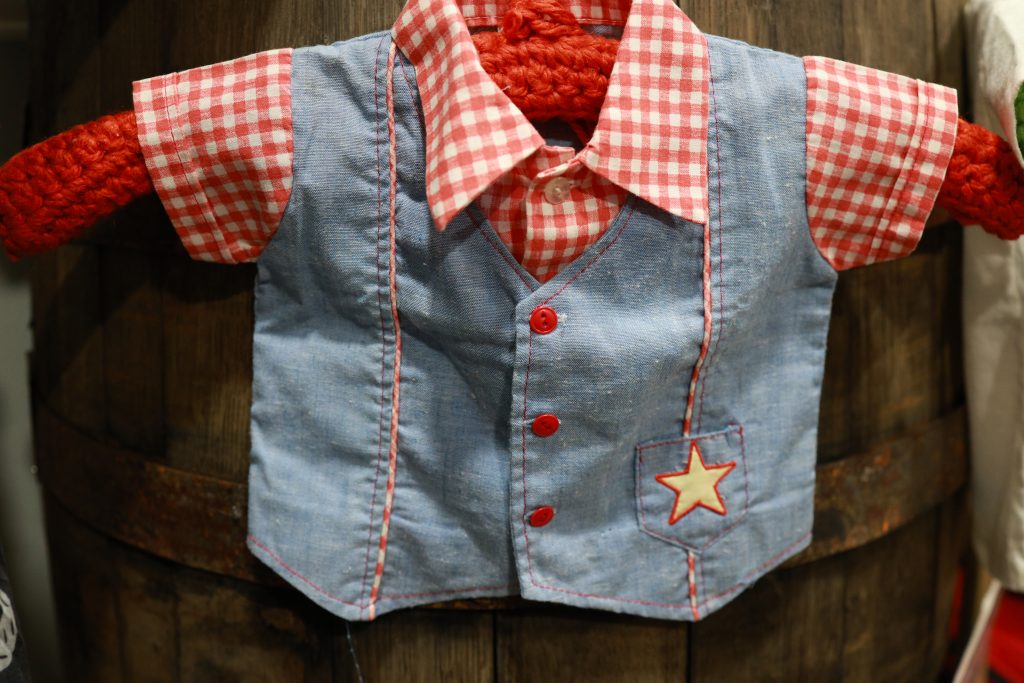
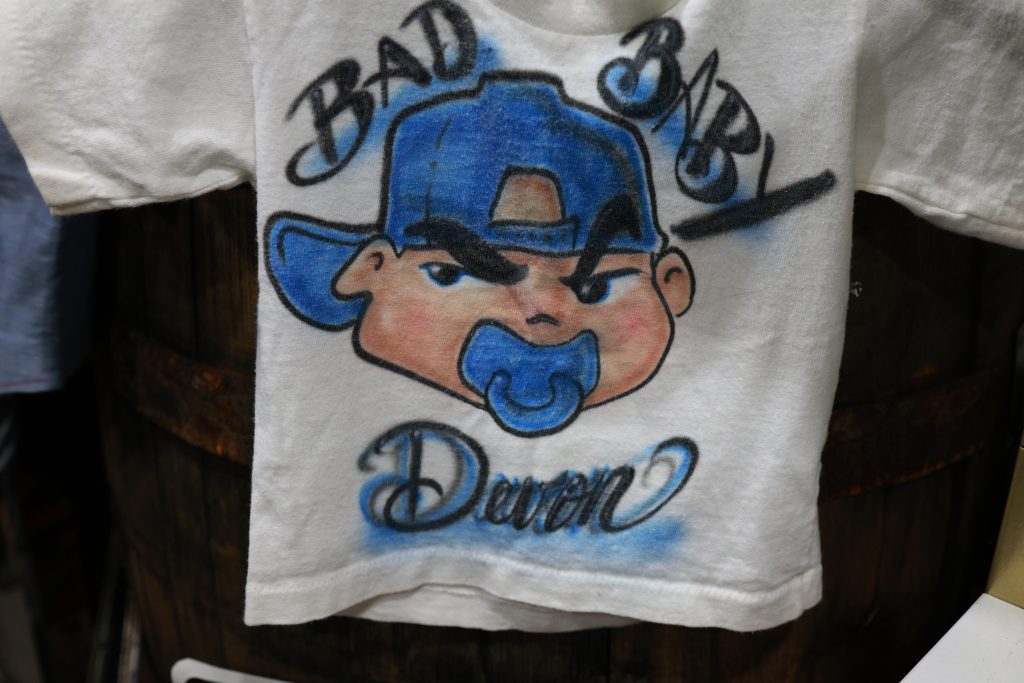
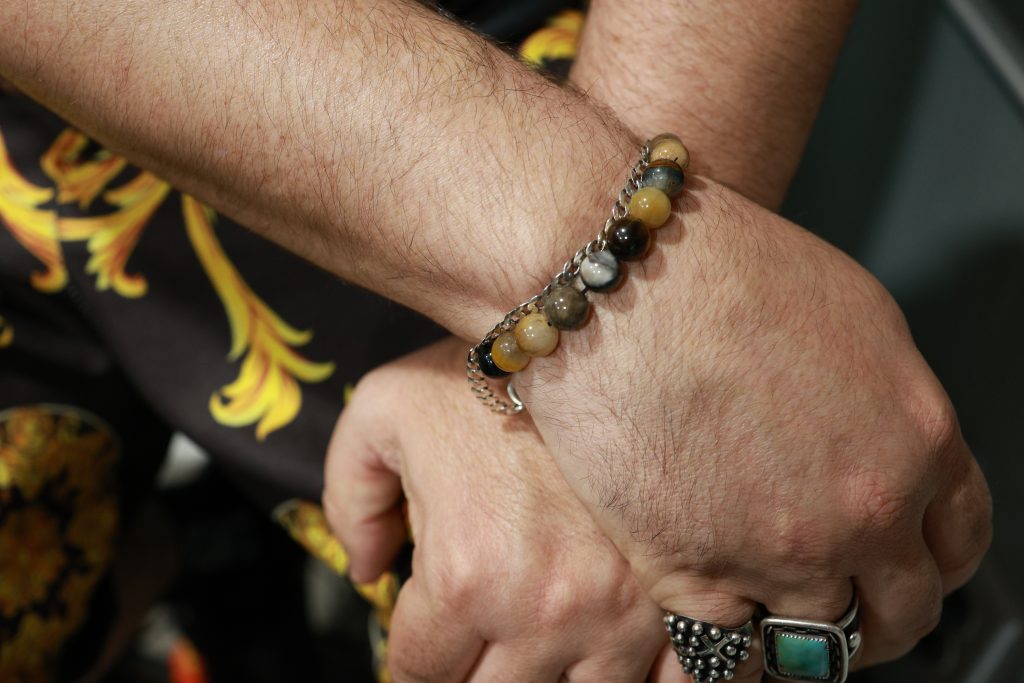
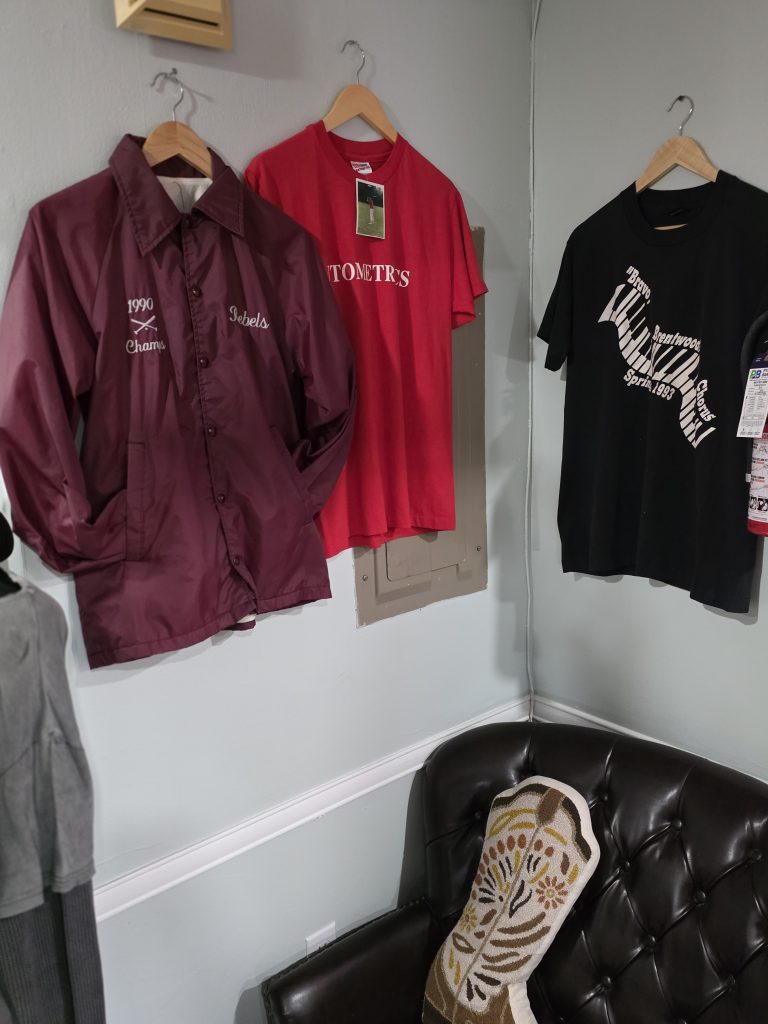
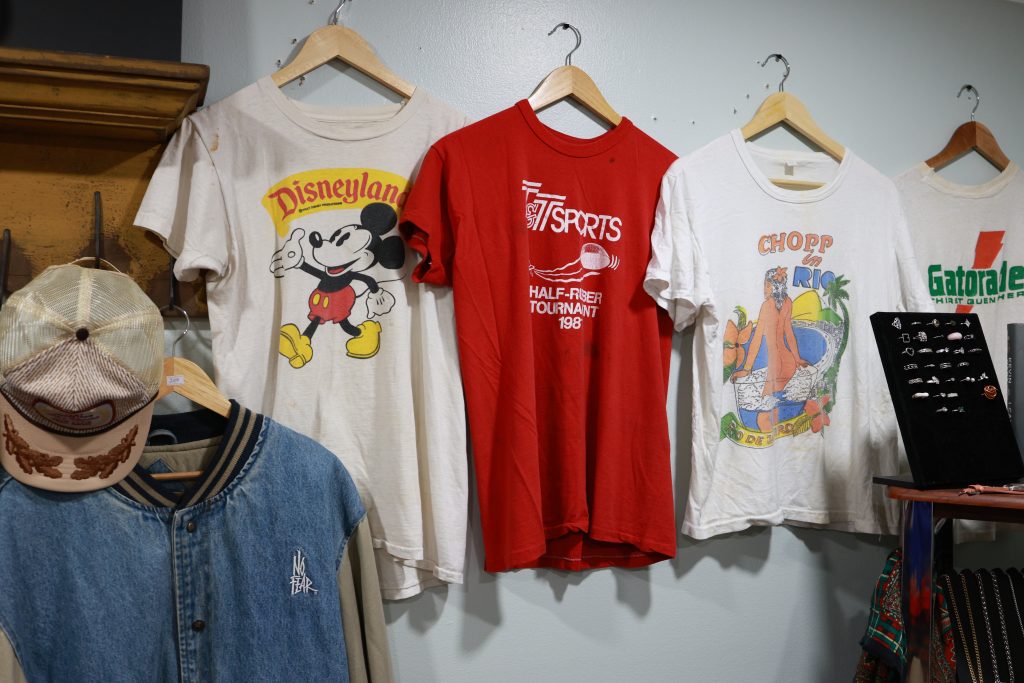
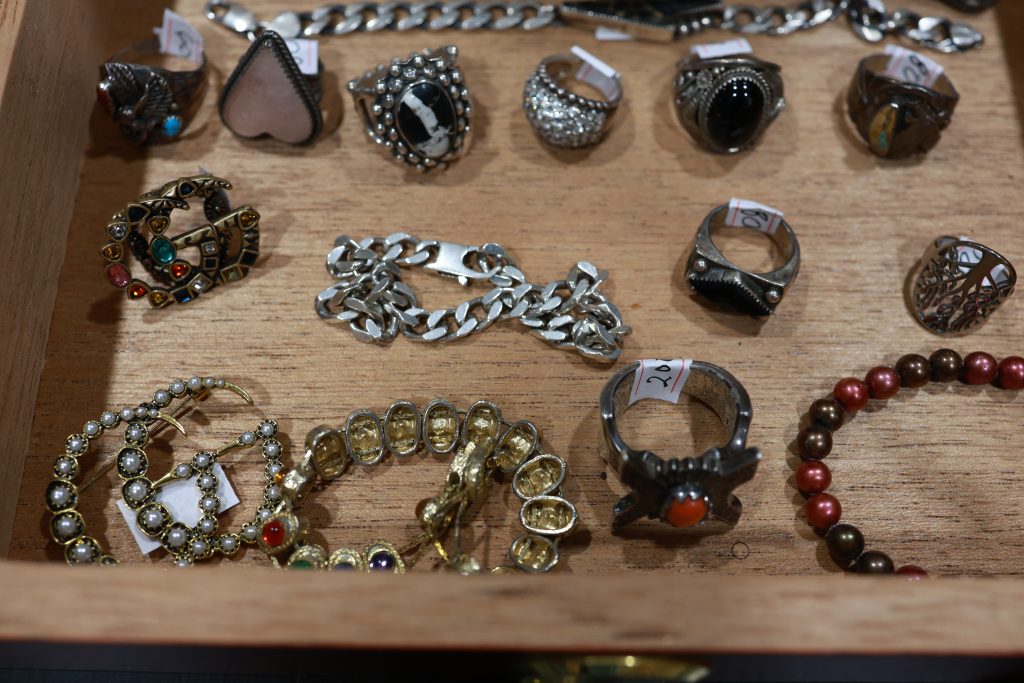
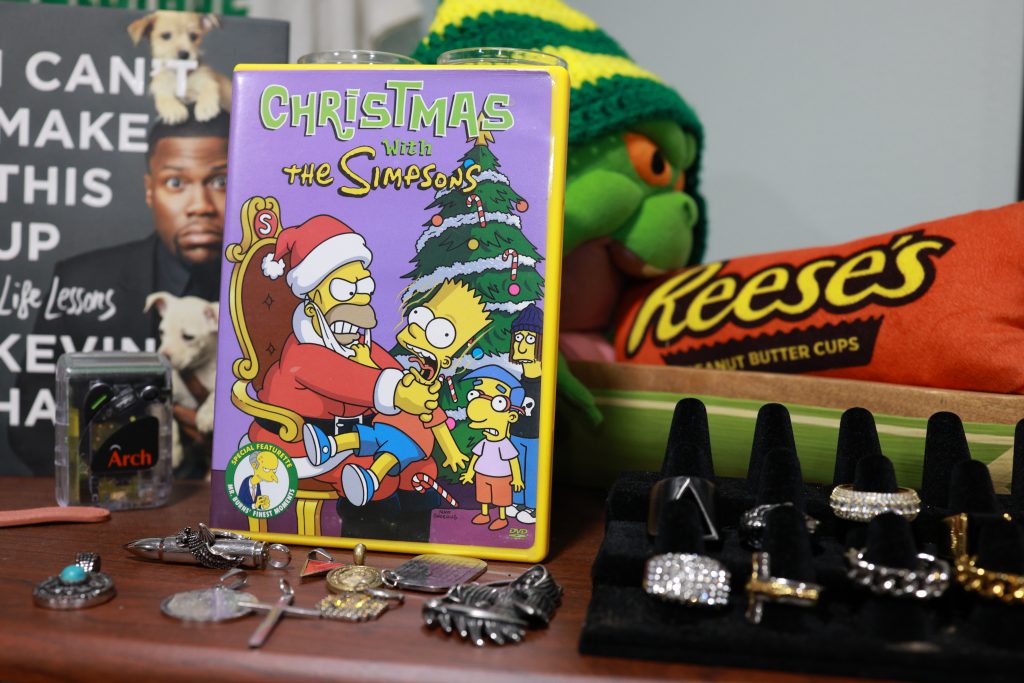
About half of David’s original collection made it into the store. “You’re not going to find 20 of the same item here,” David says. “Everything is curated, cleaned, and unique.” Customers sell and trade with him. He buys from dealers in California and Oklahoma, and he’s still out hunting for finds. Beyond clothing, Low Fashion Vintage also carries accessories – jewelry, hats, lapel pins, patches, and DVDs. His customers range from 16 to 50. Some know exactly what they’re looking for, while others, especially the younger ones, just like the way it looks. “My generation wasn’t cool about buying secondhand stuff,” he says. “Now it’s trendy.”
David funded his business entirely from savings – no bank loans or investors. Many who launch new ventures have big visions, but David, who gives off Jeffrey “The Dude” Lebowski vibes, is more laid back. “I’m not trying to get rich, I’m just trying to survive,” he says. Eventually, David wants to grow into a bigger space, somewhere with more foot traffic like the Park Circle area. “There are good days and bad days, but I’d rather have the struggle days knowing I’m trying my hardest to succeed on my own than go back to working for someone else,” he says. Well, he’s not entirely on his own. His wife Tosha, who’s in the medical field, is there to help. And his two sons – the oldest a civil engineer who also serves in the Army Reserves, the youngest doing electrical maintenance at a medical facility – recently told him they’re proud of him. That’s some pretty good fuel right there.