
Julie Grundahl: Retired Air Force pilot-turned-flight instructor shares her joy for flying
How long have you lived in Mount Pleasant?
My husband, Scott, and I have lived in Mount Pleasant since the summer of 2018. I retired from the U.S. Air Force in late 2017, and we were looking to settle in a coastal town with good public schools for our daughter. We researched towns from Beaufort, NC, down to Amelia Island, FL. We were familiar with Mount Pleasant because my sister and her family had lived here since 2011. When all the looking was over, we felt Mount Pleasant had the best local schools, neighborhoods, airport and flying environment, and proximity to family.
Tell us about your background.
I grew up in a military town—San Diego, CA. My dad served in the Air National Guard before I was born and encouraged me to consider military options for college scholarships. We took a visit to the U.S. Air Force Academy when I was a sophomore in high school, and it became my goal to get accepted, and eventually fly as a pilot in the Air Force. That plan came to fruition, but along the way, I met Scott at the Academy (in fact, we just celebrated our 30th wedding anniversary). We both served as pilots in the Air Force for over 22 years. We flew as rotary and fixed wing pilots, moving 14 times, conducting contingency and combat rescue missions, serving as Pentagon staff officers, and as operational squadron commanders. In my final assignment, I served as the Deputy Base Commander of Joint Base Andrews in Maryland, retiring as a Colonel.
Was there a moment in your military career that’s stayed with you?
Many different moments have stuck with me from my Air Force career, but flying combat rescue missions in Iraq, sometimes through massive dust storms, all night, and often eluding insurgent attempts to shoot us down with various weapons, stand out as unforgettable memories. Living and flying in hostile territory made me realize how lucky we are to be Americans and how fragile life can be.
What led you to get involved with the flight school — and what role do you play today?
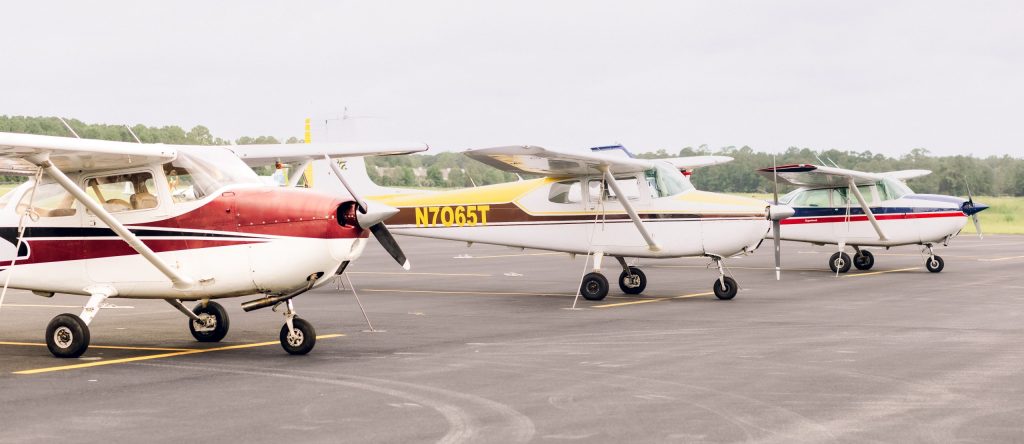
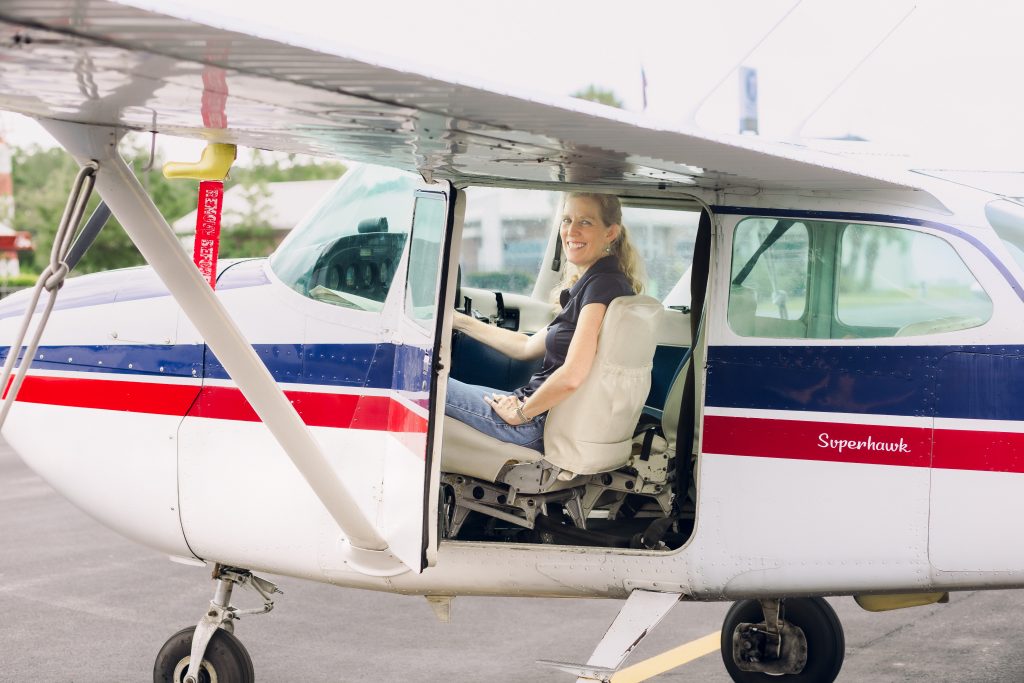
When I retired from the Air Force and moved to Mount Pleasant, I knew I wanted to teach people to fly as my retirement job. I had a young daughter and was able to find a house very close to Mount Pleasant Regional Airport, where I could tend to her needs but also instruct students at the airport. The local flight school was Mount Pleasant Flight Training, owned at the time by Joe Bustos. Joe was kind enough to give me a job right away instructing, then managing the school, and in 2020, he sold the flight school to my husband and me. From 2020 until this summer, we owned and ran the school, flying over 5,000 flight hours annually and teaching hundreds of our neighbors between the ages of 14 and 80 to fly airplanes. Just recently, we transferred ownership of the school, but I continue to work there as the school’s Chief Instructor Pilot and as a co-manager.
What was it like to step back from the business side — and what made you want to keep teaching?
Stepping back from ownership has allowed me to refocus my attention on doing what I love the most, which is teaching people of all ages and backgrounds to realize the dream of flying an airplane on their own. In the Air Force, I was taught to train my replacement and help the next generation of Airmen become better than the previous generation. Passing on ownership while staying involved in operations at Mount Pleasant Flight Training is allowing me the same opportunity to see the business continue to flourish and grow under new leadership so future generations of our neighbors can attain their aviation goals.
Who’s typically coming to learn — and what surprises people most about learning to fly?
People coming in to learn to fly range broadly from teenagers considering advanced aviation education/careers to retired professionals and empty-nesters seeking to fulfill a lifelong dream. That’s probably the biggest adjustment between teaching in the military versus civilian environment. In the military, I trained people exclusively in their 20s (some 30s) with the common characteristic being a professional military objective. As a civilian instructor, I teach people across all generations and from all walks of life, which is highly enjoyable and fulfilling. Baby Boomers have a much different learning style than Gen Z students, and adapting to different teaching/learning methods to find the most effective approach for each student has been a fun challenge.
Flying seems like something that must be taught in a very structured, standardized way. How do you adapt your instruction to different learning styles, age groups, or backgrounds?
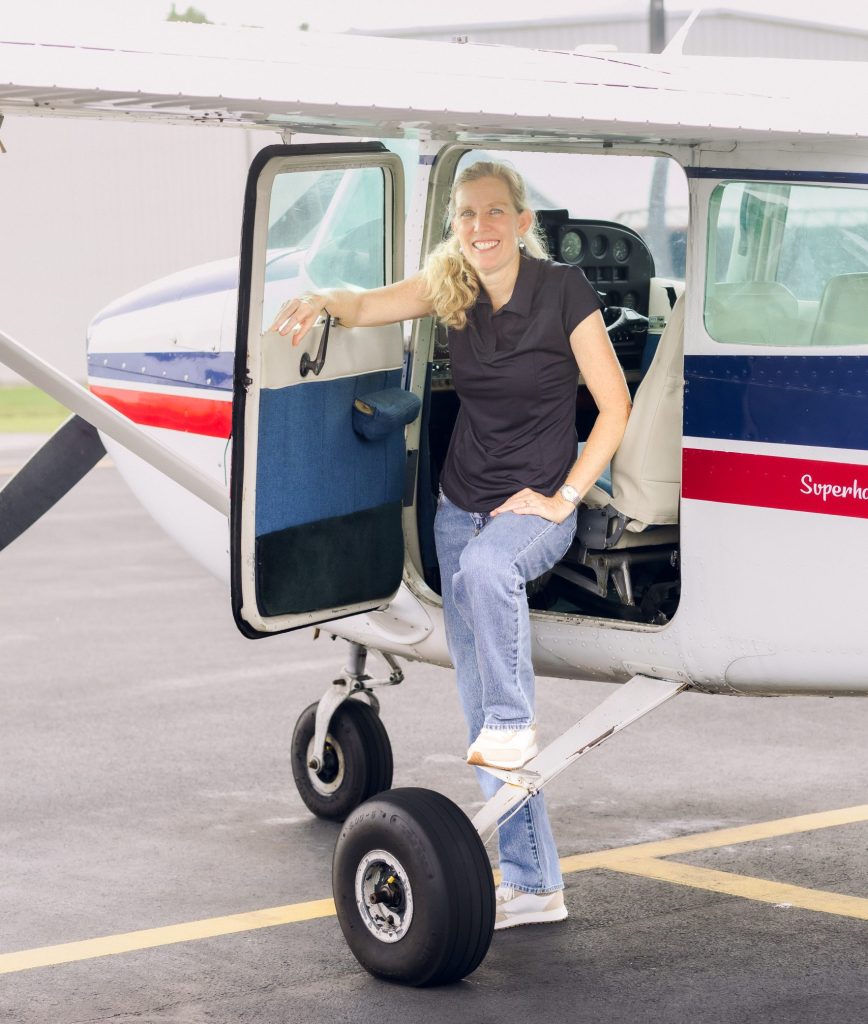
The elements of flight training are indeed very structured and standardized, and frankly, most of the training has not changed much over the last 50 years — the principles of flight are timeless. Obviously, avionics (communications technology and GPS) have enhanced situational awareness and navigational capabilities, but those enhancements have made flying simpler, not harder. The method of delivery of the subject matter is what changes somewhat from generation to generation. Getting to know your customers and finding out how they learn and what works for them are key to adapting the delivery of training from one student to another.
For example, young students no longer learn in school by reading textbooks. They watch short internet clips to learn a vast array of subject matter. Finding the right virtual learning vendors to deliver accurate content for ground school in digestible snippets is important for young learners, while Baby Boomers still like hard copy books and highlighters! Additionally, in flight, the lexicon to describe and train maneuvers and provide feedback on performance needs to adjust to communicate effectively with various demographic groups.
How long does it take the average person to earn their pilot’s license?
The average person takes six months to a year to get their license, depending on the amount of time they can commit each week to the effort. Full-time students or professionals will need more time than those with greater schedule flexibility.
What misconceptions do people have about learning to fly?
Some people worry that the plane will fall out of the sky if something goes wrong, or if the engine loses power. Until they experience aerodynamic principles practically, they may not trust them to be true. The first flight usually dispels any fears about that when they see and feel for themselves how practical those principles are in actuality.
What do you enjoy most about teaching others to fly?
The thing I like best about teaching people to fly is seeing the joy on their faces, or in their body language, when they nail their first polished landing, or when they solo an airplane for the first time. The sense of accomplishment and newfound confidence is palpable, and feeling like you had a small part to play in the production of pure joy is something special.
Is there a moment with a student that really stuck with you?
A moment that really stuck with me was when I had the opportunity to see an 80-year-old student through a solo flight on his 80th birthday. We had been working together for about six months to get him to the point where he felt comfortable being alone flying the plane from start to finish. Luckily the weather was great that day, and he took off and flew around Charleston and the coastline for about an hour before landing. After he landed, he was ecstatic and told me: “Now, I can call my wife and children and let them know what I just did!” We had a good laugh about that because I had assumed they were aware, but he didn’t want them to worry (or stop him from trying) and kept it a secret until he had done it. Being able to endorse that kind of fulfillment keeps me coming back for more.
If your father hadn’t encouraged you to join the military, what career path would you have pursued instead?
That’s a good question. For my undergrad degree, I majored in Legal Studies because I loved learning about all the different areas of the law. I think investigating crime or being a criminal prosecutor would have been a possibility for me. Luckily, I didn’t have to find out.
What advice would you give those who are considering a military career?
I would tell them to do it for the right reasons. Those reasons could include a passion to serve, working in teams, superb technical training, etc. “Bad” reasons might include escaping your current life, money, or battlefield glory.
What do you love most about living and working in the area?
Mount Pleasant is a special place. It’s the perfect combination of natural beauty, family-centric living, safety, and ample recreational options. The weather supports an aviation lifestyle, which was a must for me. If you haven’t seen Mount Pleasant and the greater Lowcountry area from the air while flying low and slow, you haven’t seen the most beautiful part. The marsh, coastal landscape, and rich history of our surroundings are all more enchanting from a bird’s-eye view than anything you’ve seen at ground level. I’ve lived and flown in every nook and corner of our great country, and Mount Pleasant is unbeatable…but let’s keep that our little secret!
What do you enjoy doing when you’re not flying?
I enjoy traveling, church, and spending time with family.
How did you celebrate your 30th wedding anniversary and what are your favorite spots around town?
For our 30th, we did a “staycation.” We got a great massage at Woodhouse Spa in Mount Pleasant. Then we went downtown and stayed at 20SouthBattery, which is a historic bed and breakfast mansion that overlooks the Charleston Battery. We had a pre-meal cocktail at the Husk Bar and ate a great dinner at Husk and explored the historic Battery district on foot.
Our favorite local restaurants in Mount Pleasant include Basil in Seaside Farms for dinner, Six Mile Eats for lunch, Sol for brunch, and Saveur de Monde for a bakery.
Last question, window or aisle?
Window. I love the view from above.
Thinking about flying? Connect with Julie via email or phone.
[email protected] / (843)-892-9380.