
The new chapter of the New Castle couple
The word “aware” comes from the Old English gewær – to be watchful. Add “self” to it, and you get something most people think they practice but few actually do: the habit of watching yourself closely enough to understand what moves you, what unsettles you, and what you keep coming back to. Elizabeth Landry has been doing this for most of her life. A background in psychology and decades in sales trained her to read people, but the deeper skill – the one that now defines her next chapter – is that she’s always turned that same lens on herself.
At 22, Elizabeth moved to London for her first job – a software company acquired by Lucent Technologies (formerly part of AT&T) sent her to help launch their Energy and Utilities division. She lived in South Kensington. “It was really a defining moment for me,” she says. “The first time I had true independence.” Most people would file that away as a fond memory. Elizabeth held onto it differently. Her daughter’s middle name is Kensington. And now, nearly three decades later, with her kids grown and a move to Charleston ahead, she and her husband Rich have named their business Kensington Design House. “It feels like a full-circle moment,” she says. “We’re writing this new chapter in that same spirit.”
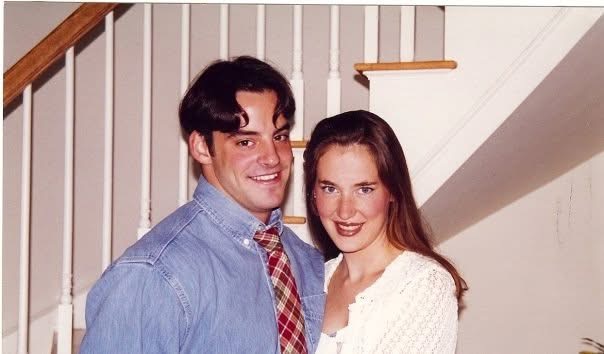
Rich Landry followed in his father’s footsteps and became an architect. Elizabeth’s path was different. She studied psychology in college, then moved into sales, traveling extensively. They met as teenagers. Elizabeth was 16, Rich was 15. She was at a small party with her boyfriend at the time – who happened to be Rich’s best friend from elementary school. The group then ventured to Ground Round for dinner but Elizabeth’s boyfriend forgot his wallet. Rich picked up the bill. “I just felt like, what a kind soul and human being,” she recalled. Elizabeth would soon break up with her boyfriend and become best friends with Rich. They grew up just north of Boston, got married at 26, and had two kids.
Get stories like this to your email
Elizabeth and Rich had talked about Charleston for years, and in the summer of 2024, they finally visited. “We just went downtown, we might have been on King Street, and we looked at each other and said, we can live here,” she says. It was the middle of July – hot, sticky – and it didn’t matter. “It wasn’t one thing. We thought it would be the design, and that was it, but it was the people, the food.” She pauses. “You’re surrounded by this history, but it doesn’t feel stuck in time like some other places. It really feels lived in.”
Elizabeth turned 50 this year. She’s not someone who makes a big deal of birthdays, but this one felt different. “I realized that I have less time ahead than I have behind,” she says. Her youngest was about to leave for college. Rich still had his architecture firm. The question, she says, became simple: “What do we actually want to do with our lives?” The answer had been in front of them for years and its origin is tied to New Castle, NH – a tiny island town of ~800 people where you pick up your mail at the post office.
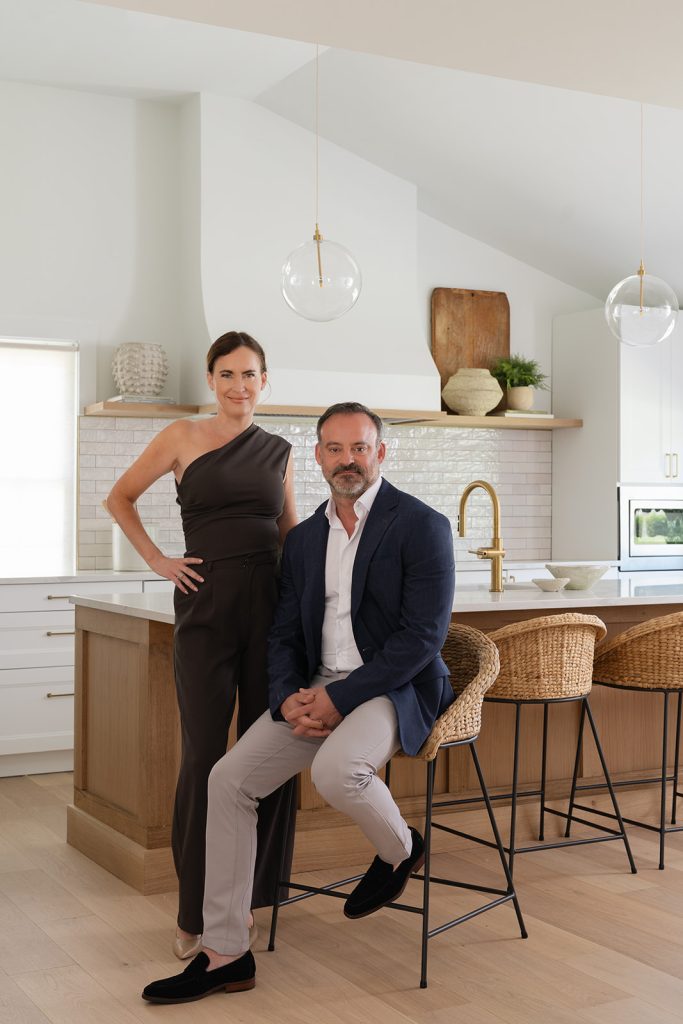
On the same street in New Castle, Rich and Elizabeth designed, built, lived in, and sold three homes. They started young – around 28, without much money, doing a lot of the work themselves. He convinced her to sell that first home and put the money toward their kids’ college education. So they sold, and built the next – which looked completely different from the first. They sold that one too, then built a third, this time during COVID when contractors were impossible to find and Rich did much of the work. Each house reflected how they were living at that moment. In between, friends and family started asking for help, not just about how to make it look good, but how to make it feel right. Rich brought the architectural lens and Elizabeth the human side of how people live.
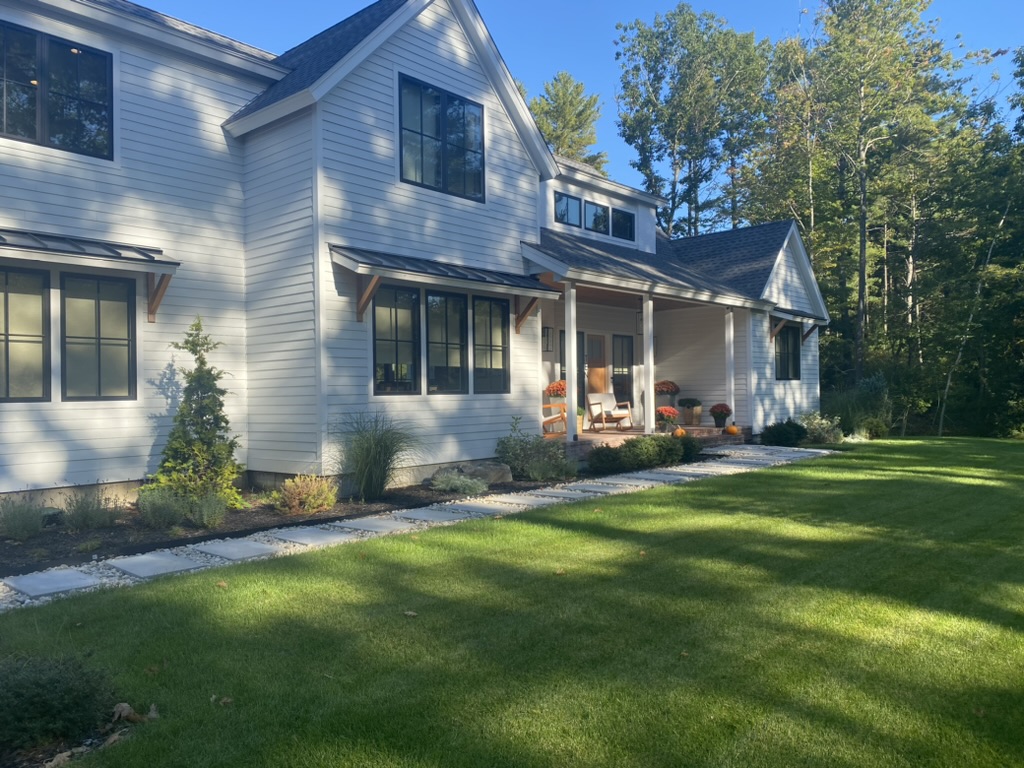
“We’re not designing for how something looks, we’re designing for how people live,” Elizabeth says. It’s a line that could sound like marketing, but Kensington Design House has built a process around it. They run clients through what they call a design insights framework – surveys and questions designed to understand how someone thinks, what matters to them, and how they make decisions. They look into how a person uses a space and they pay close attention to what is difficult to express. “People don’t always know how to articulate what they want,” she says. “It requires being a little bit of a therapist.” They look at spaces through several lenses – the structure and light, how materials hold up over time, and how a home feels over the course of a day. “There’s no such thing as a neutral space,” she says. “It’s either supporting how you live, or working against you.”
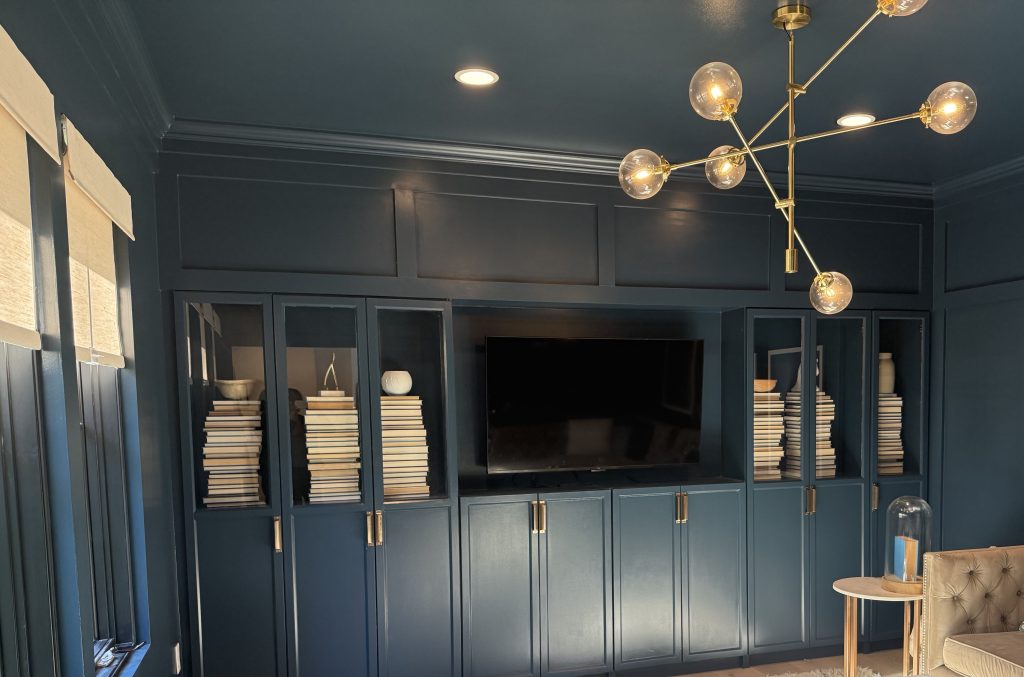
Their design approach follows an 80/20 rule. Eighty percent of a space is resolved quietly – calm, clear, something you can move through without friction. The remaining twenty percent is where they introduce elements that carry more weight. “It could be a hood, a beautiful light, a material shift, a piece of art,” she says. “You have to be willing to take a little bit of that risk while maintaining that calm, because if everything feels safe, the space really won’t stay with you.” That instinct for curation extends beyond client work. Elizabeth and Rich are building what they call a Living Showroom – pieces sourced through their travels that they bring into their own spaces first, live with, and then offer through pop-ups, events, and online.
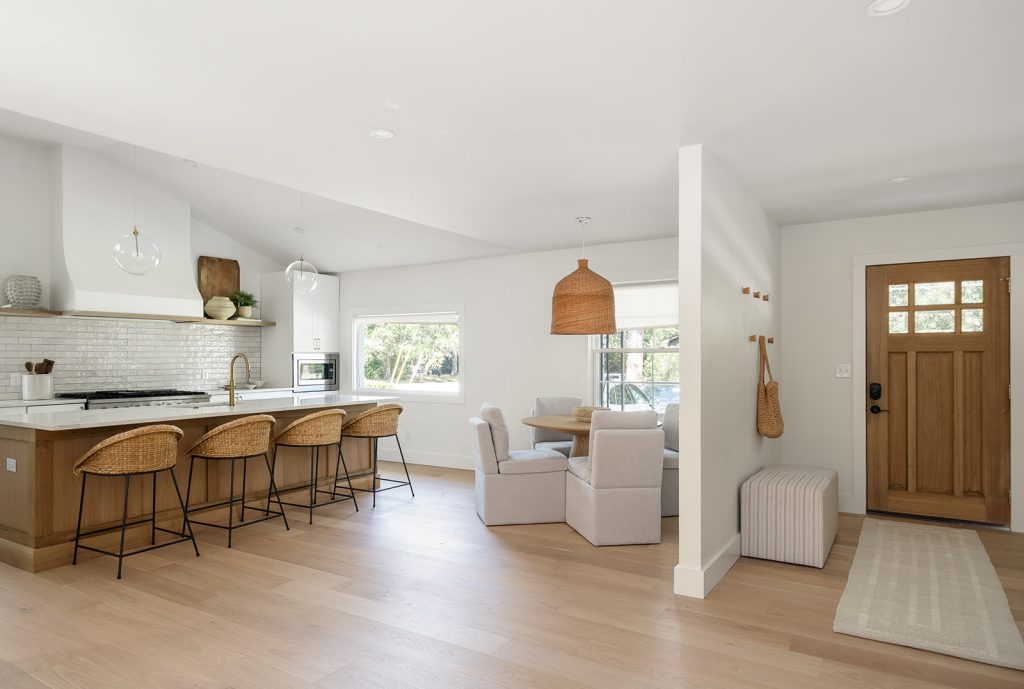
The Landrys are moving to Charleston this summer. They will be a little closer to their son who’s a freshman at Florida Tech, and very close to their daughter who just committed to College of Charleston. They have a place on Daniel Island for now, but the plan is to do what they’ve always done – design and build their own home. “This was literally us jumping a bit off of a cliff,” Elizabeth says. “It’s definitely a little scary, but it’s fun, and it feels like this is what we’ve been meant to do.”
Stay up to date with Kensington Design House at kensingtondesignhouse.com and on Instagram.